
IFEVS and Solbian: Reflex–Policy Photovoltaics
September 2026 · Industrial Collaboration
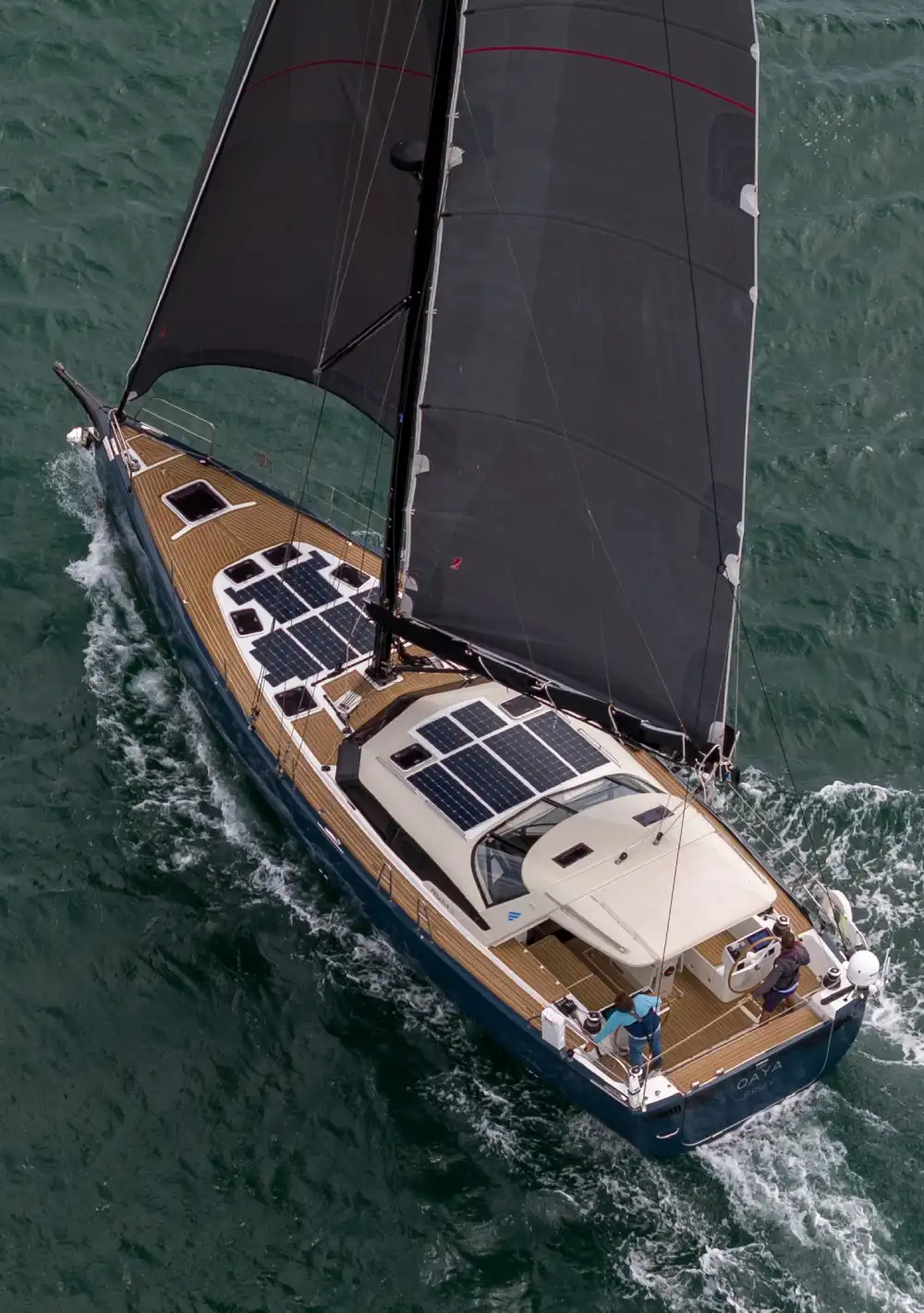
Flexible photovoltaic panels integrated on a sailing yacht
Interactive Fully Electrical Vehicles and Solbian have agreed to collaborate on developing, integrating and validating Reflex–Policy technology for photovoltaic systems exposed to severe and continuously changing partial shading.
Why partial shading matters
The first applications will be electric mobility and marine systems. On EVs, vans, buses, cargo bikes, e-bikes and boats, curved surfaces, different orientations and moving shadows can reduce the usable energy produced by fixed-topology PV systems.
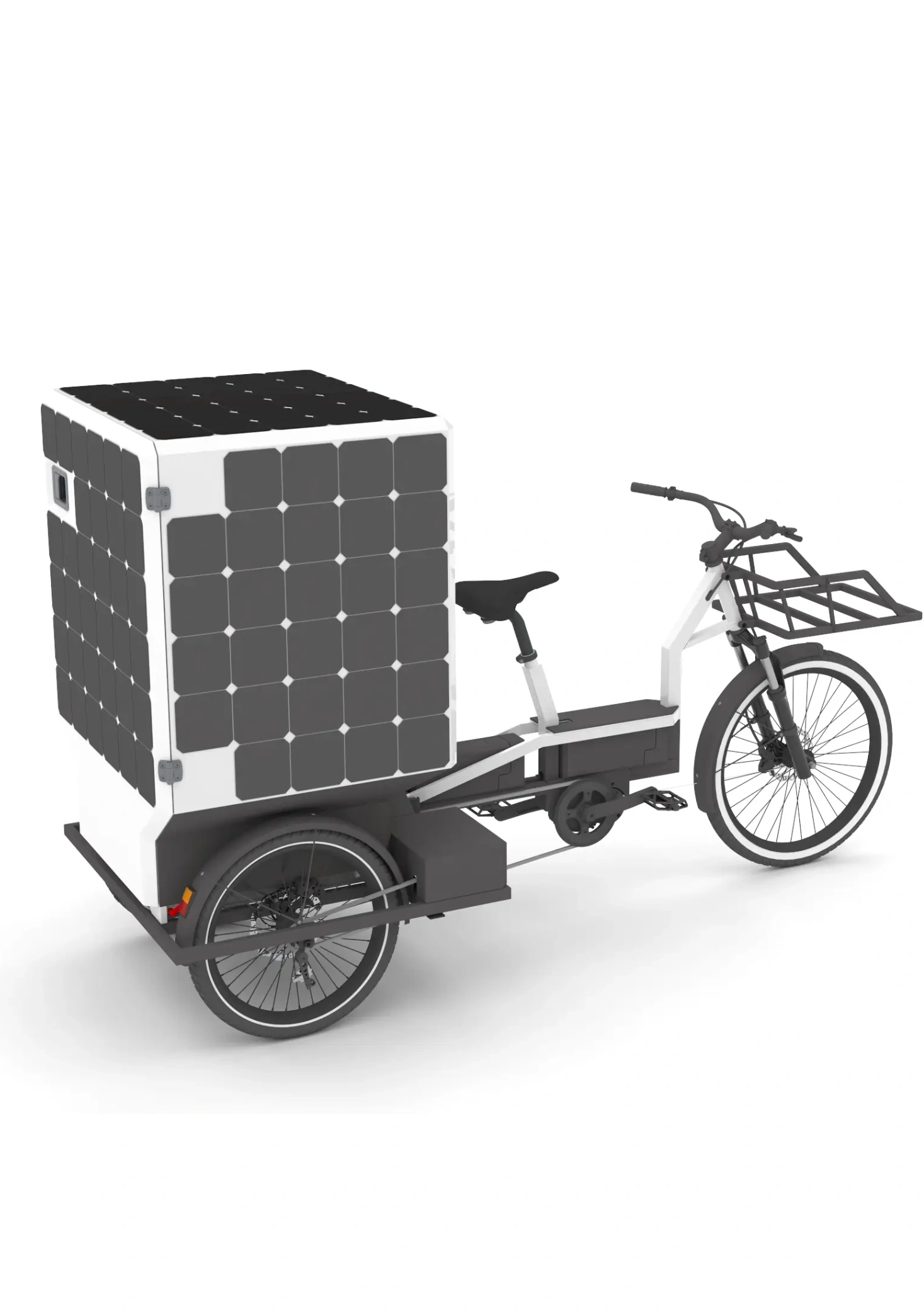
IFEVS three-wheel cargo bike with photovoltaic cargo box
A technology-agnostic architecture
Building on knowledge generated within the European Pathfinder project MultiSpin.AI, IFEVS developed Reflex as a technology-agnostic architecture. It is not tied to a specific memory or semiconductor technology and can use conventional microcontrollers, CPLDs, FPGAs and power electronics available from European suppliers.
Reflex–Policy complements MPPT and protection functions. Local measurements authorise bounded actions—such as bypass, isolation or topology reconfiguration and verify the physical response.
Laboratory results
Laboratory work has demonstrated a verified topology-change command within 25.35 ms, about 0.82 mJ per switching action.
Preliminary models indicate the potential for 8–15% additional net annual energy in selected mobility and heavily shaded marine applications. The collaboration will validate this benefit under representative operating profiles.
A European opportunity
European volumes exceed seven million new electric mobile platforms annually across the target categories. At only 1% adoption, about 70,000 installations per year and an average integrated PV and control value of €100–250 per application, the addressable product opportunity is €7–18 million per year, before marine applications.
This is strategically important for Europe. Some 97% of solar panels imported into the EU come from China, while China represents about 85% of global solar manufacturing capacity and 95% of PV wafer production.
Europe can retain high-value capabilities in module engineering, power electronics, intelligent control, system integration, cybersecurity and intellectual property. This is the strategic layer addressed by the IFEVS–Solbian collaboration.
What each partner brings
For Solbian, the collaboration supports differentiated flexible-PV functionality and wider mobility and marine applications. For IFEVS, Solbian contributes high-efficiency panels, product constraints and application experience, accelerating Reflex–Policy industrialisation.
Next steps
The first work will define panel configurations, shading profiles, interfaces and comparisons with identical fixed-topology baselines.
This independent initiative builds on the long-standing relationship between IFEVS and Solbian.
Reflex–Policy tutorial video
The tutorial is available on the MultiSpin.AI website and on Zenodo:
- multispinai.eu - Workshop recording: First applications of spintronic crossbars in energy harvesting
- Zenodo - doi.org/10.5281/zenodo.22687198